How to renew equipment without putting your liquidity at risk
Many companies postpone renewing equipment because they want to protect their liquidity. The intention is right. The consequence isn't always.
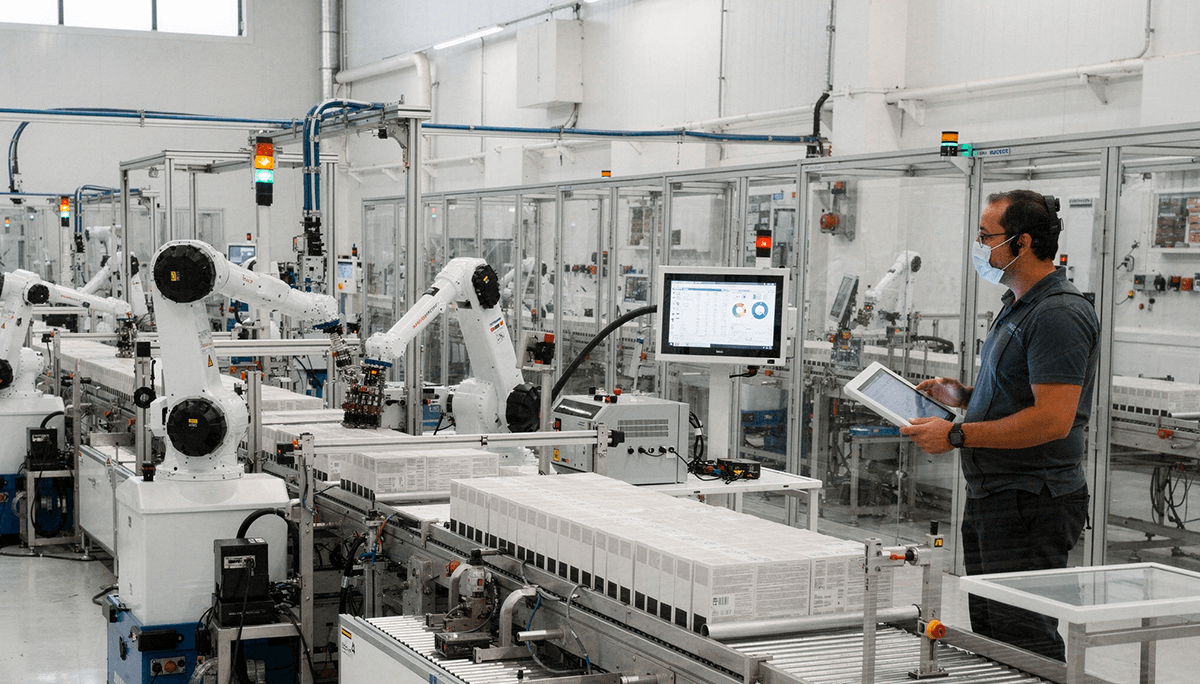
Continuing to operate with obsolete assets can look prudent in the short term, but it can become expensive: more maintenance, more downtime, lower efficiency, higher energy consumption, late deliveries, quality defects, or lost contracts to competitors with better operating capacity.
Old equipment doesn't always show up in the income statement as a single line. Its cost appears scattered: spare parts, unproductive hours, penalties, waste, rework, dependence on third parties, or customers who stop waiting.
That's why renewing productive assets shouldn't be seen only as a purchase. It should be seen as a decision about continuity and productivity.
The challenge is financing that renewal without leaving the company exposed. Paying cash can solve the technical problem while creating a financial one. If the company uses a significant share of its available capital to replace equipment, it may be left with less margin for inventory, payroll, suppliers, taxes or commercial expansion.
Leasing offers an alternative. It provides access to newer or more efficient equipment through scheduled payments, which helps spread the cost over time and preserve working capital. For assets that wear out, get updated, or need periodic renewal, this structure can be particularly useful.
The key is comparing the cost of renewing against the cost of not doing it.
If a stopped machine delays production, if an aging fleet drives up maintenance, if technology equipment limits service, or if a critical asset no longer meets a client's standards, the company is not saving. It is absorbing a cost it doesn't always measure precisely.
Before renewing, it's worth building an operational diagnosis. Which equipment generates the most failures, how much it costs to maintain, how much unproductive time it causes, what additional capacity the company would have with a new asset, which contracts it could serve, and what the cash flow impact would be if it were bought outright versus leased.
That diagnosis makes it possible to decide with more clarity. Not every piece of equipment needs replacing immediately. Some assets still do their job and can wait. But when an asset constrains the operation, the analysis has to go beyond price.
At Pixxo, leasing is understood as a way to support that balance. It isn't about changing equipment for the sake of it, but about identifying which assets are holding the business back and structuring a solution that allows it to move forward without decapitalizing.
Because growth doesn't always start with selling more. Sometimes it starts with no longer losing capacity every day to tools that are no longer up to what the business needs.
Sources consulted: INEGI, Monthly Indicator of Gross Fixed Capital Formation, April 2026; BBVA México, financial leasing; Element Fleet Management México, operating and financial leasing.